how to make a budget when you live paycheck to paycheck
A practical, cash-first blueprint to stop overdraft fees, prioritize your Four Walls, and build your emergency cushion.

Sarah Jenkins
Senior Financial Strategist • Published Oct 24, 2024

Learning how to make a budget when you live paycheck to paycheck begins with one immediate tactical shift: you must budget the exact cash currently sitting in your bank account today, rather than estimating projected monthly earnings. According to 2026 Federal Reserve economic data, approximately 62% of working adults in the United States operate in a recurring cash-flow trap where scheduled monthly liabilities consume every dollar before the next pay cycle arrives. Breaking this pattern requires an intentional, forward-looking cash allocation framework. By assigning every single dollar to immediate survival obligations first and tracking every outflow through an interactive tool like SphereBudget, you replace financial anxiety with systematic precision.
Why Traditional Monthly Budgeting Traps You in the Paycheck Cycle
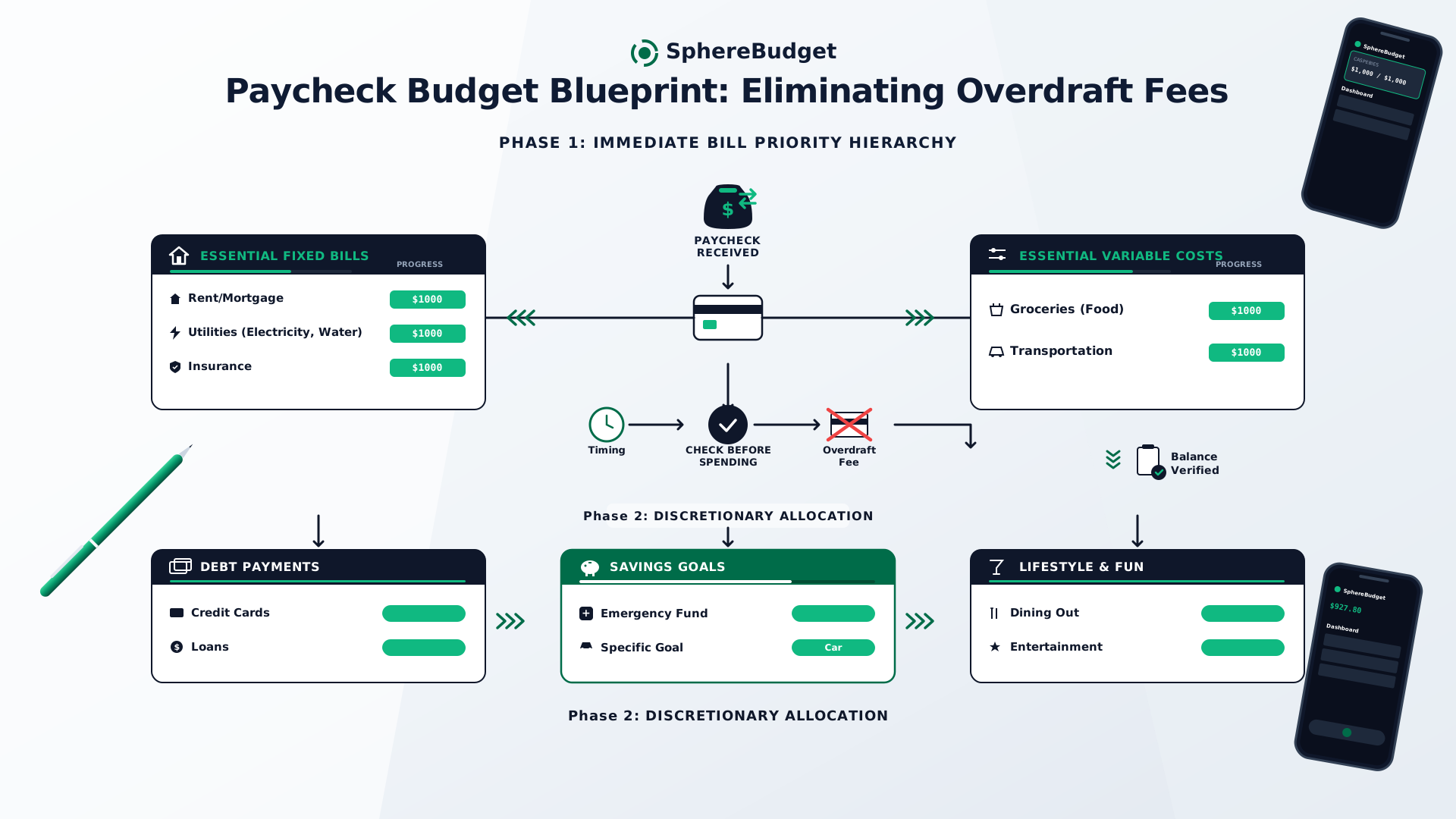
Standard personal finance advice assumes you have a predictable, pre-funded buffer sitting in checking at the start of every calendar month. When you live paycheck to paycheck, this assumption creates dangerous cash timing gaps. If your rent is due on the 1st but your primary payroll deposit arrives on the 15th, an aggregate monthly budget shows you have enough money on paper while your checking account balance drops into overdraft territory.
To overcome this mismatch, transition from calendar-month budgeting to pay-period cash scheduling. Every time a deposit clears, list every bill, grocery trip, and transit cost that must be paid before your subsequent pay date. SphereBudget’s Budget Planner enables you to divide and allocate income into dedicated pay-period segments, ensuring no dollar is spent twice or committed before it exists in your possession.
The 5-Step Paycheck Survival Blueprint
Step 1: Establish Your Four Walls Priority List
When cash is constrained, your spending plan must ruthlessly separate fundamental physiological survival needs from secondary lifestyle commitments. The Four Walls consist of Shelter, Sustenance, Basic Healthcare, and Transportation to Work.
Step 2: Calculate Your Exact Cash Runway
Take your current account balance and subtract scheduled automatic withdrawals due over the next 14 days to uncover any structural timing deficits.
Step 3: Match Specific Bills to Specific Paychecks
Map your recurring liabilities against calendar pay dates. Contact utility providers to permanently shift due dates to the second half of the month to balance your cash outflows.
Step 4: Implement a Daily Cash Cap for Discretionary Variable Outflows
Divide whatever cash remains after your Four Walls by the number of days until your next deposit. Tracking this daily limit in SphereBudget's Expense Tracker ensures small purchases do not erode your grocery buffer.
Step 5: Build a Micro-Buffer of $500 Before Aggressive Debt Payoff
Set an initial $500 milestone in SphereBudget's Savings Goal Tracker to absorb unexpected shocks without derailing your weekly cash flow.
Debunking the Income Myth: Why Earning More Rarely Solves the Cycle
A widespread personal finance myth claims that paycheck-to-paycheck living is solely an income problem that disappears with higher earnings. Behavioral economics research demonstrates that lifestyle inflation expands at the exact velocity of income growth when foundational tracking habits are absent. Sustainable solvency is an operational habit of intentional allocation, not a fixed gross revenue number.
Pro Tip: Run a 72-Hour Subscription Freeze and Negotiate Fixed Utilities
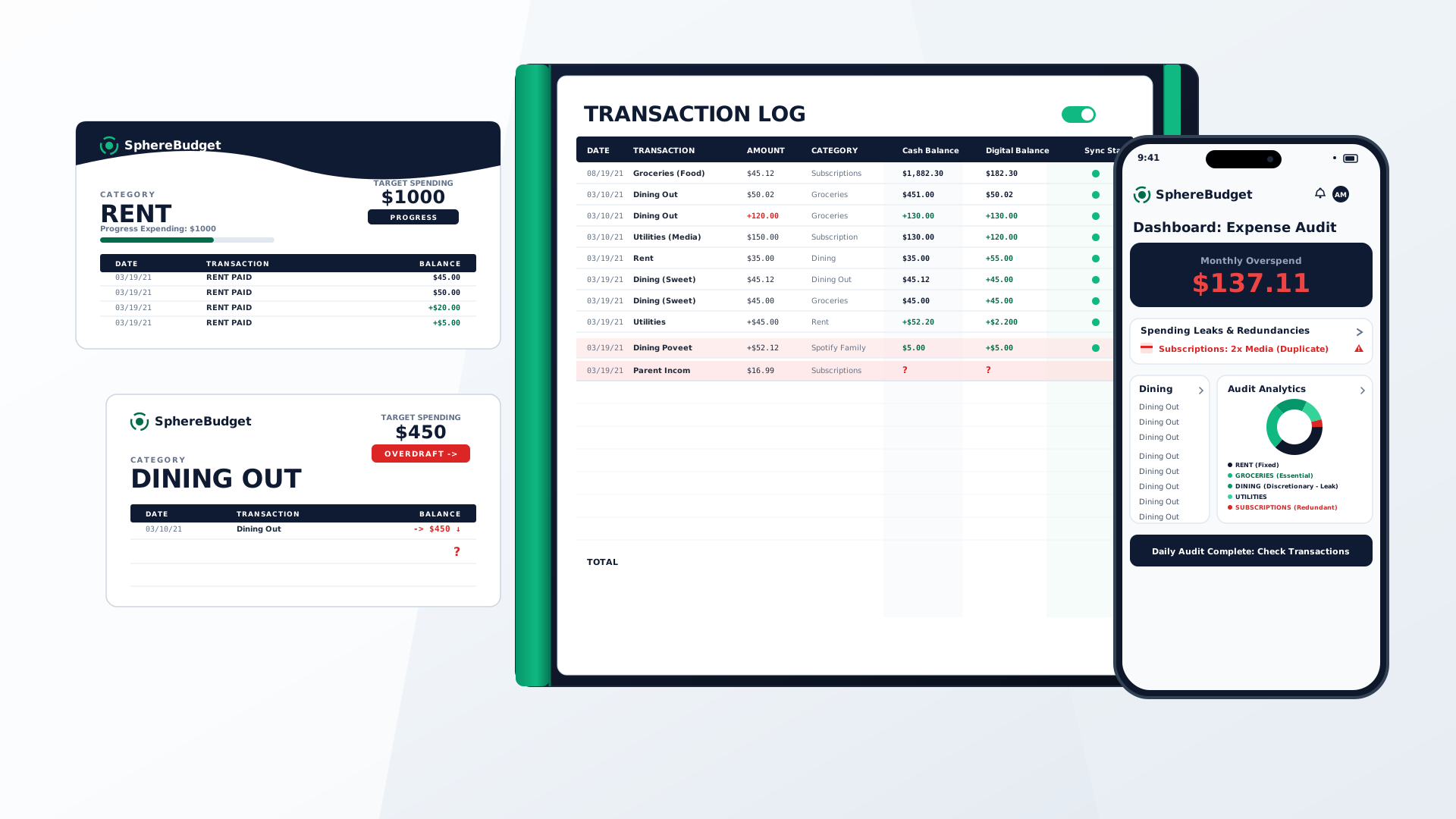
Audit your last 60 days of checking account statements and immediately eliminate every non-essential recurring subscription. For essential services like internet and insurance, call providers directly and request retention rates or tier downgrades. A single hour of phone negotiations frequently uncovers $80 to $150 in recurring monthly breathing room.
How to Handle Variable Bills When Money Is Tight
Seasonal spikes in electricity or heating oil can shatter a tight budget. Combat this by enrolling in levelized billing programs with your utility providers. These programs average your trailing twelve months of usage to produce an identical, flat billing charge every month. Predictability is the greatest defense against mid-month cash deficits.
Once fixed amounts are established, log them directly into your SphereBudget workspace. Having an automated, transparent dashboard gives you total visibility over upcoming commitments, transforming budgeting from an exercise in anxiety into an empowering daily operating system.
This is educational guidance – consult a CFP for personalized advice.
Monthly Budget Planner
Allocate your 50/30/20 proportions and get instant luxury Excel reports.
Written by Sarah Jenkins
Senior financial strategist specializing in behavioral economics and wealth preservation frameworks at SphereBudget.
In This Article
Related Reading

zero based budget spreadsheet free printable
A zero based budget spreadsheet free printable is an intentional money management framework where your total net income minus all allocated expenses equals exactly zero.

50 30 20 budget rule calculator for beginners
A 50 30 20 budget rule calculator for beginners divides your total net take-home pay into three simple, proportional spending categories.

budget planner for variable income freelancers
Using a specialized budget planner for variable income freelancers is essential for navigating unpredictable revenue swings and tax reserves.