emergency fund calculator how much do i need
Determine your exact 3 to 6-month baseline emergency runway, tier your cash cushions, and protect against life surprises.

Elena Rostova
Wealth Advisory Director • Published Oct 14, 2024

An emergency fund calculator how much do i need provides an accurate, personalized estimate of the liquid cash reserves required to protect your household from job disruption, medical emergencies, home repairs, or unexpected financial shocks. Federal Reserve survey data shows that 37% of American adults cannot comfortably cover a sudden $400 emergency using cash or savings. While standard advice often recommends an arbitrary "3 to 6 months of income," an effective emergency fund should be calculated based on your essential baseline living expenses rather than total gross salary. With SphereBudget’s Savings Goal Tracker, you can model your exact survival costs, set milestones, and build a personalized emergency fund tailored to your career stability.
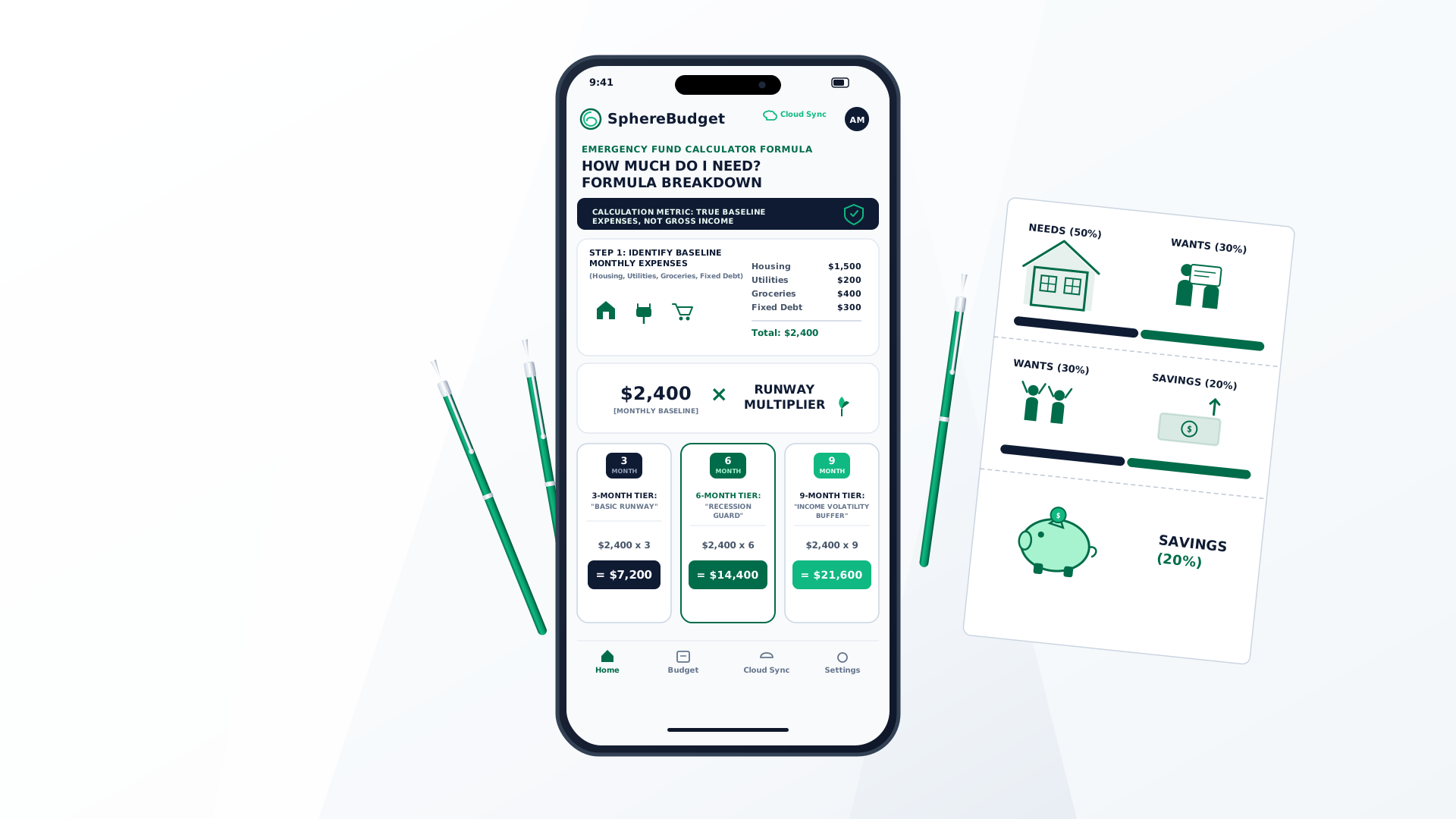
The Exact Math Behind Your Emergency Cash Runway
Your emergency target is calculated as: Baseline Monthly Expenses × Target Months = Required Emergency Reserve. Baseline expenses include only non-negotiable living needs (rent/mortgage, utilities, essential groceries, minimum debt payments, and basic healthcare).
5 Steps to Calculate and Build Your Ideal Emergency Reserve
- Step 1: Audit Your Essential Fixed Expenses: Calculate monthly baseline shelter, utilities, food, and minimum debt payments.
- Step 2: Evaluate Your Employment and Health Risk Factors: Choose 3 months (dual-income salaried), 6 months (single income), or 9-12 months (freelance/commission).
- Step 3: Multiply Monthly Essentials by Your Target Months: Determine your exact emergency reserve number.
- Step 4: Establish a Tiered Funding Progression in SphereBudget: Fund Tier 1 ($1,000), Tier 2 (1 month), then Tier 3 (Full Runway).
- Step 5: Store Funds in High-Yield FDIC-Insured Accounts: Keep your cash in a dedicated high-yield savings account earning 4%+.
Debunking the Traditional Savings Account Myth: The Cost of Idle Cash
Keeping a $15,000 emergency fund in a traditional 0.01% checking account loses real value to inflation every year. Moving that cushion to a 4.5% High-Yield Savings Account generates over $675 in compound annual interest with zero market risk.

Pro Tip: Tier Your Emergency Fund Across Multiple Accounts
Keep one month of expenses in a checking-linked high-yield account for instant ATM access, and place the remaining 2 to 5 months in a separate online bank to earn maximum yield while removing spending temptation.
Automating Emergency Milestones with SphereBudget
SphereBudget's Savings Goal Tracker allows you to set custom funding targets, monitor savings velocity, and maintain a private, comprehensive view of your emergency safety cushion.
This is educational guidance – consult a CFP for personalized advice.
Monthly Budget Planner
Allocate your 50/30/20 proportions and get instant luxury Excel reports.
Written by Elena Rostova
Senior financial strategist specializing in behavioral economics and wealth preservation frameworks at SphereBudget.
In This Article
Related Reading

how to make a budget when you live paycheck to paycheck
Learning how to make a budget when you live paycheck to paycheck begins with one immediate tactical shift: you must budget the exact cash currently sitting in your bank account today.

zero based budget spreadsheet free printable
A zero based budget spreadsheet free printable is an intentional money management framework where your total net income minus all allocated expenses equals exactly zero.

50 30 20 budget rule calculator for beginners
A 50 30 20 budget rule calculator for beginners divides your total net take-home pay into three simple, proportional spending categories.